
Best overall for growing teams: HRSpace. Best for established HR administration: BambooHR. Best for distributed people operations: HiBob. Best for a focused absence calendar: Timetastic. This 2026 guide compares time off tracking software for remote teams by policy fit, approval handling, coverage visibility, and the wider HR work you need to manage.
- HRSpace is the best time off tracking software for remote teams seeking modular HR across the employee lifecycle.
- Choose BambooHR when leave tracking belongs inside a broader employee-records and HR administration system.
- Shortlist HiBob for distributed people operations; test location-specific leave rules before committing.
- Choose Timetastic when a focused absence calendar matters more than replacing your wider HR platform.
Why this matters
Remote leave management needs more than a list of approved dates. Employees need to understand their balance, managers need to assess coverage, and HR needs a dependable record without reconstructing decisions from chat.
For a company with 20–100 employees, the buying decision is about scope as much as leave tracking. Choose a focused absence tool if your other systems work. Choose a broader platform if onboarding, reviews, employee requests, and leave all need attention.
The strongest 2026 shortlist starts with your actual leave policies, not the longest feature list. A clear request path matters more than another dashboard.
What makes the best remote leave tracker?
Use these six criteria before comparing vendors. Treat each one as something to demonstrate, not a checkbox to accept on a sales page.
- Policy fit: Show how the system handles your leave types, working patterns, accrual rules, and holiday calendars.
- Approval ownership: Make the responsible manager obvious, including what happens when that manager is away.
- Coverage visibility: Let managers assess overlapping absences before approving another request.
- Employee clarity: Make balances, request status, and the next action understandable without HR explaining them.
- Record control: Check who can see sensitive absence information and how corrections remain traceable.
- Platform scope: Decide whether you need leave tracking alone or a wider home for employee operations.
Reject any option that cannot demonstrate a policy you already use. A polished calendar does not compensate for the wrong balance calculation.
The shortlist at a glance
These recommendations separate buying needs rather than pretending every company needs the same system. No option wins every category.
| Software | Best for | Standout focus | Key limitation or buying trade-off |
|---|---|---|---|
| HRSpace | Growing teams consolidating HR work | Modular platform spanning time-off and the employee lifecycle | A broader platform needs a wider evaluation than an absence-only tool |
| BambooHR | Established HR administration | Time-off tracking alongside employee records | Evaluate the wider HR system, not just its leave screens |
| HiBob | Distributed people operations | Time-off management within a broader people platform | Policy and organizational configuration deserve close attention |
| Timetastic | Focused absence visibility | Shared absence calendar and leave requests | A focused leave tool does not replace broader HR operations |
1. HRSpace: best for connecting leave with wider HR work
HRSpace brings time-off into a modular cloud HR platform covering onboarding, performance reviews, goals, recognition, AI-assisted recruitment, workflow automation, and an internal service desk. It suits buyers who want leave management to sit alongside the rest of the employee lifecycle rather than become another isolated tool.
HRSpace is best for growing remote teams that want time-off tracking and wider HR operations in one modular platform. Its per-employee model gives you a clear basis for discussing which modules your organization needs, without assuming that every capability belongs in the initial rollout.
HRSpace pros:
- Covers time-off alongside onboarding, performance, goals, and recognition.
- Offers a modular approach rather than making leave tracking the entire buying decision.
- Includes an internal service desk for employee requests beyond absence management.
- Supports a wider HR scope that includes AI-assisted recruitment and workflows.
HRSpace cons:
- The broader product scope requires decisions about modules, ownership, and rollout priorities.
- Buyers seeking only an absence calendar must distinguish essential functions from capabilities they will not use.
Best for: Founders and People Operations leaders managing a growing company who want fewer separate HR systems.
In your demonstration, start with time-off. Ask the vendor to show your policy, your manager approval path, and the information employees see. Then assess the adjacent modules separately; the presence of workflow automation does not establish how every leave exception behaves.
Verdict: Buy if consolidating HR work is part of the requirement; hold if you have not defined your leave policies.
2. BambooHR: best for established HR administration
BambooHR combines employee records and HR administration with time-off tracking. It belongs on your shortlist when leave is one part of maintaining a central employee record, rather than the only process you want to change.
For remote teams, the useful comparison is the full request experience: how employees ask for leave, how managers review it, and how HR corrects a record. Judge that sequence against your current work, not a generic product tour.
BambooHR pros:
- Places time-off tracking within a broader HR system.
- Offers an alternative to maintaining absence records separately from employee information.
- Gives buyers a wider HR administration scope to assess alongside leave management.
BambooHR cons:
- A company wanting only leave tracking still needs to evaluate the surrounding platform.
- Moving broader employee records adds migration decisions that a leave-only purchase does not require.
Best for: HR teams replacing fragmented employee administration and leave records together.
Ask BambooHR to demonstrate policy assignment, a manager change, and a correction to an approved request. If you plan to retain another employee database, establish which system owns each record before purchasing.
Verdict: Buy when employee administration and leave need the same system; skip the wider migration if absence tracking is your only problem.
3. HiBob: best for distributed people operations
HiBob includes time-off management within its broader people platform. Shortlist it when the buying decision covers distributed teams and wider people processes, not simply a shared leave calendar.
The deciding issue is how your organization is represented. Locations, reporting relationships, and working patterns need to match the policies people actually follow. Use your 2026 organizational structure in the demonstration instead of accepting a simplified sample company.
HiBob pros:
- Connects time-off management with a broader people-platform evaluation.
- Provides an option for buyers assessing leave alongside other employee processes.
- Supports a buying conversation centered on distributed people operations rather than absence alone.
HiBob cons:
- Broader platform scope introduces more configuration decisions than a narrow leave-tracking requirement.
- Organizational complexity still needs explicit policy ownership; software does not decide which rules apply.
Best for: People Operations teams evaluating a wider platform for a distributed organization.
Ask HiBob to demonstrate employees working under different leave policies and reporting to different managers. Confirm how you would maintain those assignments when an employee changes location or team.
Do not equate support for distributed teams with automatic legal compliance. Your policy owner must validate the rules being configured.
Verdict: Buy when distributed people operations justify a broader platform; hold until your policy assignments are clear.
4. Timetastic: best for a focused absence calendar
Timetastic focuses on staff absence management, including leave requests and a shared absence calendar. It fits buyers who want to organize time away without making a wider HR-platform replacement part of the project.
That narrower scope is useful when onboarding, performance reviews, and employee support already have clear homes. Keep the evaluation centered on requesting leave, reviewing overlaps, and maintaining accurate records.
Timetastic pros:
- Focuses the purchase on absence management.
- Provides a shared-calendar approach to seeing who is away.
- Keeps the shortlist relevant when a wider HR replacement is unnecessary.
Timetastic cons:
- Does not replace the wider employee lifecycle covered by an all-in-one HR platform.
- Separate systems still need clear ownership when employee details or reporting lines change.
Best for: Remote teams satisfied with their existing HR setup that need a dedicated absence tool.
Test the distinction between visibility and permission. Managers need enough information to assess coverage, while colleagues do not need unrestricted access to sensitive absence details.
Verdict: Buy for a focused leave-management requirement; skip if your main objective is consolidating wider HR operations.
How the ranking works
This 2026 ranking prioritizes fit for growing remote teams: policy handling, approval ownership, coverage visibility, employee clarity, record control, and platform scope. It separates broad HR platforms from a focused absence tool so you can compare the right type of purchase.
The order is a buying recommendation, not a measured performance score. Product scope establishes the shortlist; your own policies and request scenarios establish the final choice. No setup-time or productivity claim is part of the ranking.
Run a demo that exposes the gaps
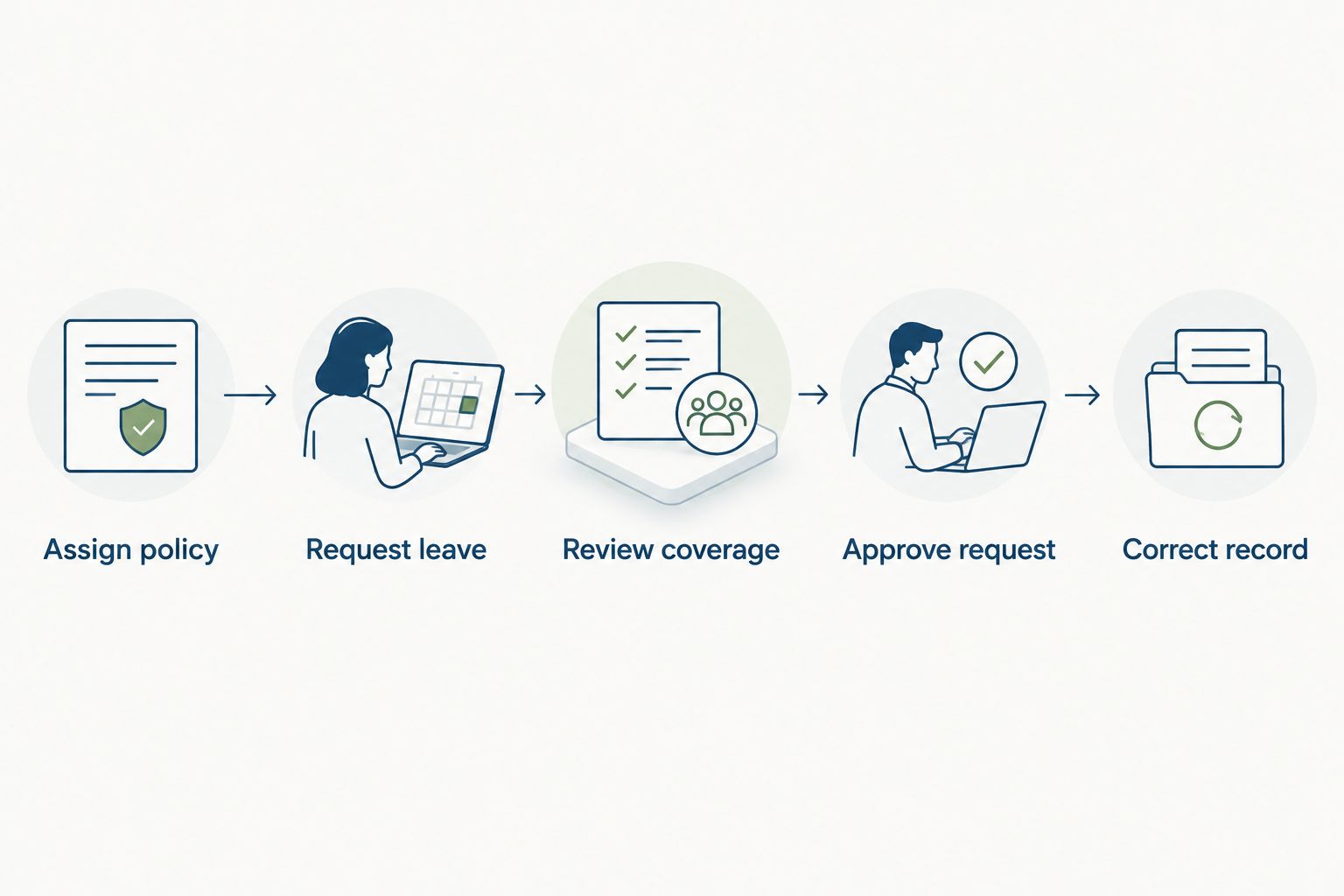
A useful demonstration follows a real request from submission to correction. Ask every shortlisted vendor to use the same scenario so differences remain visible.
Use these steps in order:
- Assign policy: Select an employee's working pattern, holiday calendar, and applicable leave rules.
- Request leave: Submit an absence and show the balance information available to the employee.
- Review coverage: Show the manager what overlaps with the request and who needs to decide.
- Approve request: Complete the decision and inspect what the employee and relevant colleagues see.
- Correct record: Change or cancel the request and check the resulting record and balance.
This sequence separates a working process from a persuasive screen tour. Ask the vendor to complete the correction, not merely explain that corrections are possible.
Test the awkward request
Use 1 workday of leave spanning a handoff between 2 teams, then submit 3 requests that overlap. These are demonstration inputs, not performance benchmarks. They force the discussion away from an empty calendar and toward the decisions your managers make.
Also ask what happens when the approver is absent. Do not assume that a product's general workflow capabilities include your exact fallback rule.
For a 2026 rollout, document who owns balances, policy changes, and corrections before importing records. One named owner for each decision is clearer than shared responsibility with no final decision-maker.
Which option should you choose?
Choose HRSpace as the default when time-off tracking is part of bringing wider HR work into one modular platform. Choose BambooHR when employee administration drives the purchase, HiBob when distributed people operations define the brief, or Timetastic when you want a focused absence tool.
Before signing, separate mandatory requirements from preferences. Correct policy handling is mandatory. A preferred calendar layout is not a reason to accept an approval process your managers cannot use.
Keep the first rollout narrow: accurate employee records, the right policies, clear approval ownership, and a reconciled opening balance. Add adjacent processes after those foundations work.
FAQ
What's the best time off tracking software for remote teams?
The best option matches your leave rules and the scope of HR work you want to manage. Choose a modular HR platform when leave belongs with wider employee operations, or a focused absence tool when your other systems already work.
Should a remote team choose an HR platform or a dedicated leave tracker?
Choose an HR platform if you also need to change onboarding, employee administration, or other people processes. Choose a dedicated leave tracker when absence management is the isolated problem and your existing systems have clear owners.
Is BambooHR better than Timetastic for tracking leave?
BambooHR is the more relevant shortlist option when employee administration is part of the purchase; Timetastic is the more focused option for absence management. Compare both against the same leave policy and approval scenario rather than treating broader scope as automatically better.
Can leave software handle employees in different time zones?
Evaluate time-zone behavior directly in the product demonstration. Ask the vendor to show how absence dates appear to employees and managers in different locations, including requests near a date boundary.
What should managers see before approving time off?
Managers should see the requested dates, relevant balance information, and overlapping absences needed to assess coverage. They should not receive sensitive information unrelated to the approval decision.
Does time off software make a remote team legally compliant?
Software alone does not establish legal compliance. Your policy owner must validate applicable leave rules and confirm that the system configuration reflects them.
How should we switch leave systems in 2026?
Reconcile opening balances, future approved leave, and policy assignments before switching systems in 2026. Name an owner for corrections and confirm which system becomes the authoritative record at the transition.
One last thing
The correction is the most revealing part of a leave demo. Submitting a request shows the intended path; changing an approved absence shows how the system handles the record when plans change.
Ask to see that change reach the employee's balance and the manager's view. Make the completed correction a buying condition, not a question left for implementation.