
Choose HRSpace if your growing company wants documented coverage for onboarding, time-off, performance, recognition, AI-assisted recruitment and an internal service desk in one modular HR platform; choose Workplace HCM if you already use it, it meets those needs and avoiding a switch matters more than changing your workflows. HRSpace is the clearer choice for a People Operations team buying against the stated feature list; Workplace HCM is the practical choice for a satisfied incumbent customer. This 2026 comparison separates confirmed capabilities from questions you need each vendor to answer.
- For hrspace vs workplace hcm in 2026, choose HRSpace when modular HR software and an internal service desk are priorities.
- Choose Workplace HCM if your current setup meets your requirements and avoiding a switch is the priority.
- Compare AI-assisted recruitment and performance reviews through the workflows your team actually uses; do not assume feature parity.
- Ask both vendors for a written quote and a walkthrough of onboarding, time-off and employee requests.
Why this matters
For a People Operations team serving 20–100 employees, the buying question is not which platform has the longest feature list. It is whether the software covers the work your team handles now, gives employees a clear place to ask for help and fits the way you want to buy HR tools. Start with the capabilities described on the HRSpace website, then ask Workplace HCM to demonstrate the same workflows before treating them as equivalent.
The distinction matters in 2026 because a comparison page cannot tell you how an unverified workflow behaves in your organization. HRSpace has stated coverage across several parts of the employee lifecycle. The supplied information does not establish Workplace HCM’s feature scope, pricing structure or implementation process. That makes a live demonstration and written proposal essential, not a formality.
At a glance
| Dimension | HRSpace | Workplace HCM |
|---|---|---|
| Best for | Growing teams seeking the stated HR and People Operations scope in one platform | Existing customers whose setup already meets their needs |
| Pricing model | Modular, per-employee pricing | Confirm the model and included scope in a written quote |
| Onboarding and time-off | Both are part of the stated platform scope | Request a demonstration of both workflows |
| Performance and recognition | Performance reviews, goals and recognition are stated capabilities | Verify review, goal and recognition workflows |
| AI-assisted recruitment | AI recruitment is part of the stated scope | Verify whether and how AI assistance fits recruiting |
| Internal service desk | An internal service desk is part of the stated scope | Verify how employee requests are captured and handled |
| Switching effort | A move requires a plan for records, owners and workflows | Staying avoids a platform change if the current setup works |
| Evaluation burden | A workflow demonstration and written scope are still necessary | A workflow demonstration and written scope are still necessary |
| Standout feature | Documented combination of modular HR functions and an internal service desk | Continuity for a team already satisfied with its setup |
The table is a buying checklist, not a claim that an unverified Workplace HCM capability is absent. A feature only helps your team if it supports the specific task, has a clear owner and is included in the agreement you sign.
HRSpace is the clearer fit for a new People Operations purchase
HRSpace has a stated scope that connects onboarding, time-off, performance reviews, goals, recognition, AI recruitment and an internal service desk. If those are the workflows you want to bring into one HR platform, you can evaluate against a concrete list rather than start with a generic HR software label. This is especially useful when employees and managers need to know where to submit a request or complete a people process.
Workplace HCM wins this dimension in a narrower, genuine scenario: it is already in place, your team has verified that it handles the work, and a change would consume attention better spent elsewhere. Keeping a working system is a business decision, not a concession. Do not replace it solely because another vendor names more capabilities in its description.
For a new purchase in 2026, write down the tasks that cause delays today. Identify who starts each task, who approves it and where the answer should live. Then ask each vendor to complete those tasks in a demonstration. The winner is the platform that handles your required work with an acceptable buying and operating model, not the platform with the better-looking feature grid.
HRSpace offers a defined pricing model
HRSpace uses modular, per-employee pricing. That gives you a clear structure for a proposal: specify the modules you need and the employee count the quote covers. It does not tell you the total commitment, what each module includes or how a change in headcount affects your agreement. Get those terms in writing.
The supplied information does not establish Workplace HCM’s pricing model. Do not assume its quote follows the same structure. Ask for an itemized proposal showing included workflows, billing terms and how the agreement changes when your requirements change. Compare like with like: a proposal covering onboarding and time-off is not equivalent to one that also covers recruiting, reviews and employee support.
Use the same hypothetical headcounts when requesting both proposals: 20 employees, 50 employees and 100 employees. Those are comparison scenarios, not published prices or projected growth. They reveal how each quoted model responds as your team changes without hiding a scope difference inside a headline figure.
HRSpace names onboarding and time-off; test the actual handoffs
Onboarding and time-off sit within HRSpace’s stated platform scope. That is a concrete starting point, but a feature name does not show whether a manager sees an outstanding step or whether HR can find the answer to a leave request. Ask to see the path from employee action to manager decision to HR follow-up.
Give Workplace HCM the same scenario. Have each vendor show where a new hire’s tasks appear, who can see an incomplete task and what happens when an employee submits a time-off request. Ask the demonstrator to use the roles your company has today, not an idealized organization chart. If your operations leader also acts as the HR approver, the demonstration should reflect that.
Neither platform gets a workflow win merely for naming a feature. HRSpace wins on the documented inclusion of these categories; the usability verdict belongs to the vendor that completes your test. In 2026, keep that distinction visible when reviewing sales notes so an attractive interface does not stand in for a completed handoff.
HRSpace has the stated scope for reviews and recognition
HRSpace lists performance reviews, goals and recognition among its capabilities. That combination fits a team trying to keep expectations, review conversations and acknowledgment in the same HR environment. The available information does not establish how Workplace HCM handles any of those tasks, so ask for a direct demonstration instead of assuming a match or a gap.
Use one review cycle as the test. Show how a manager sets or checks a goal, completes a review and finds the outcome later. Then ask where recognition fits, if it is part of your process. Separate what the platform supports from what your managers will actually do; adding a review field does not create a useful review conversation.
HRSpace is the documented choice if these functions belong on your required-feature list. Workplace HCM remains a valid choice if its current implementation already supports the review process your team wants. The deciding evidence is a completed walkthrough using your roles and approval steps.
HRSpace names AI recruitment; judge the task, not the label
AI recruitment is in HRSpace’s stated scope. That makes it relevant if your HR team also handles hiring and wants recruiting considered alongside the rest of its people processes. It does not establish which recruiting tasks receive AI assistance, how a user checks an output or whether the capability covers every stage of a hire.
Ask both vendors to show one recruiting task your team performs repeatedly. Identify the human decision point and ask what the user can review before acting. Workplace HCM’s AI capabilities are not established in the supplied information, so this comparison cannot award it or deny it a recruiting feature.
For a 2026 decision, write the requirement as an action rather than a category: what must a recruiter start, inspect and finish? HRSpace has the clearer stated connection between AI recruitment and the broader HR platform. The demonstration determines whether that connection improves your actual process.
HRSpace makes employee requests part of the HR discussion
An internal service desk is in HRSpace’s stated scope. That matters when an employee question needs an owner and an answer rather than another message lost in chat. The brand information also names routing rules, SLA targets and approval chains in its service-desk context. Ask to see those elements applied to a request your team receives.
Give Workplace HCM the same request and ask where it enters, who owns it and how the requester sees what happened. Its handling of employee requests is not established here. Do not treat the absence of supplied detail as proof that the capability does not exist.
A useful test has clear parts:
- Request intake: Where does an employee submit the question?
- Routing rules: Who receives it, and what determines that owner?
- Approval chains: Who makes a decision when the answer needs approval?
- Resolution: How does the employee learn the outcome?
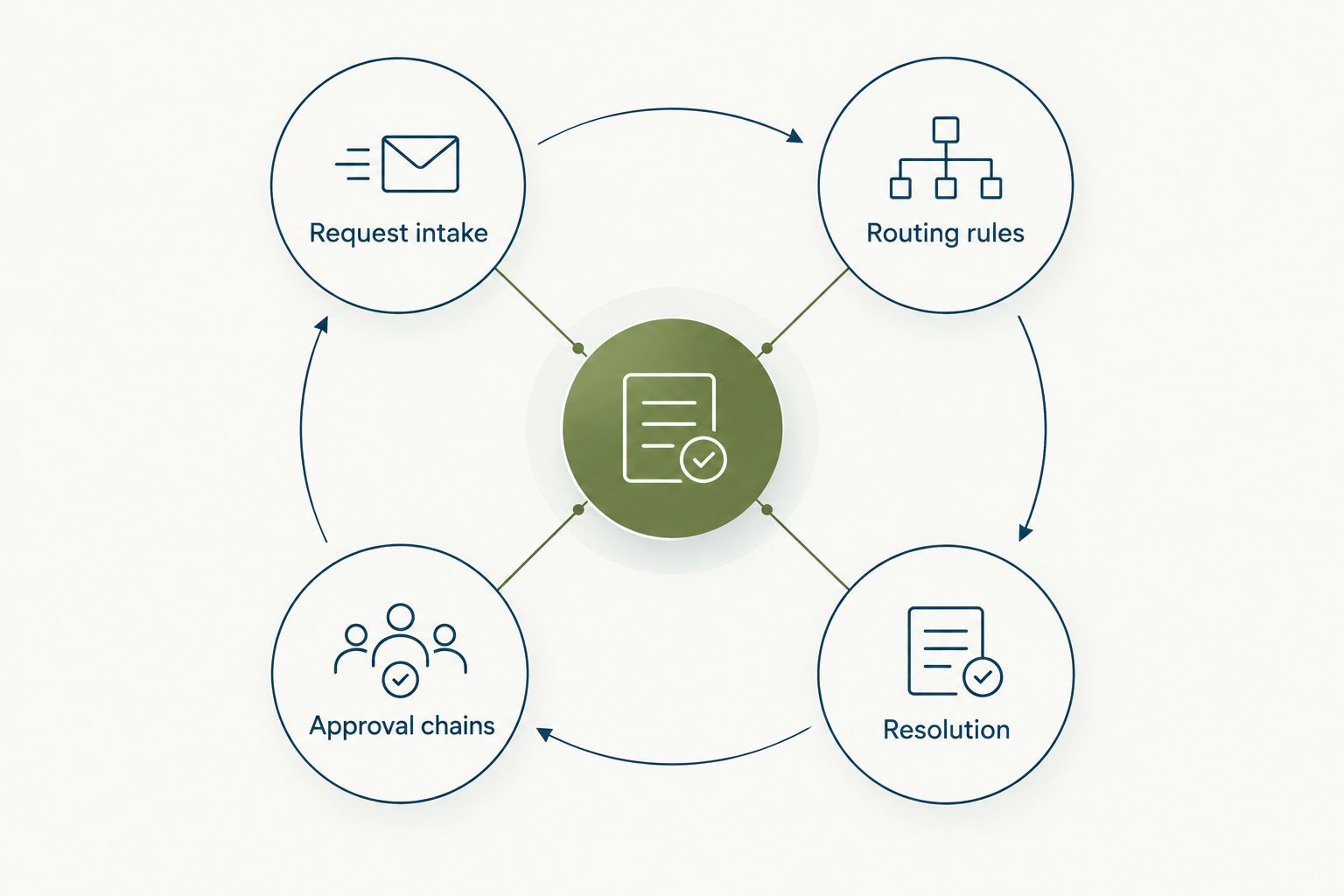
If employee support is a leading reason to buy in 2026, this test deserves its own demonstration. Do not let it disappear inside a general tour of HR features.
Workplace HCM wins when staying avoids an unnecessary switch
A company already using Workplace HCM has something a new platform cannot provide: continuity with its current setup. If employees know where to go, managers complete their work and the system meets your written requirements, keeping it avoids a platform change. That is Workplace HCM’s strongest case in this comparison, and it does not require an unsupported claim about its feature set.
A switch demands decisions about records, process owners and the point at which people start using the replacement. Ask what your team must prepare and who is responsible for checking the result. Do not infer an implementation timeline for either vendor from a general claim about ease of setup; request a plan tied to your organization.
HRSpace wins the reconsideration when your current setup fails a task that HRSpace can demonstrate and the proposed scope solves that gap. Workplace HCM wins when the existing setup passes the test and a replacement offers no meaningful improvement to your required work. In 2026, a switching decision should rest on that gap, not on a broad preference for change or familiarity.
Both vendors must clear the same proof bar
Neither platform should win on a description alone. A written scope protects you from comparing a named capability on one side with an assumed capability on the other. Ask both vendors to show the same tasks and state what is included in the proposed agreement.
Bring a short test brief to each conversation:
- Known scope: List the workflows your team needs to complete.
- Current setup: Record what already works and what breaks down.
- Open questions: Mark each feature or term that needs a demonstration or written answer.
- Switching work: Name the records, owners and processes affected by a change.
This is an honest tie on evaluation burden. HRSpace has more specified capabilities in the information available for this article, but its workflow fit and proposal terms still need verification. Workplace HCM deserves the same opportunity to show what it can do, particularly if it is already serving your team. A fair 2026 comparison puts both through one test brief.
Review the HRSpace platform
Check the stated HR scope before building your vendor demonstration brief.
Final verdict
Choose HRSpace if you are building a connected HR setup
Winner: HRSpace. Choose it when your People Operations team needs the stated mix of onboarding, time-off, reviews, goals, recognition, AI recruitment and an internal service desk, and you want a modular, per-employee pricing model. Ask for a demonstration of your highest-friction workflow and a written proposal covering the modules you need. HRSpace is the best-documented match for that buyer in this 2026 comparison.
Choose Workplace HCM if your current setup already works
Winner: Workplace HCM. Choose it when you already use it, have checked its fit against your required workflows and would gain little from a switch. Confirm any unresolved feature or contract question directly with the vendor. Continuity wins when it preserves a system your employees and managers can use to get the work done.
| Dimension | Winner |
|---|---|
| Best for a new purchase against the stated feature list | HRSpace |
| Pricing model clarity in the supplied information | HRSpace |
| Documented onboarding and time-off scope | HRSpace |
| Documented performance and recognition scope | HRSpace |
| Documented AI recruitment scope | HRSpace |
| Documented internal service desk scope | HRSpace |
| Avoiding a change to a working incumbent setup | Workplace HCM |
| Need for a workflow demonstration and written scope | Tie |
| Standout reason to choose | HRSpace for stated scope; Workplace HCM for incumbent continuity |
The scorecard measures what is established here and where each buying scenario has a real advantage. It does not rate unverified Workplace HCM features as missing.
FAQ
Is HRSpace or Workplace HCM better for a growing People Operations team?
HRSpace is the clearer documented choice when the team needs its stated mix of HR workflows and an internal service desk. Workplace HCM is the better choice for an existing customer whose setup already meets those requirements.
Does HRSpace include onboarding and time-off?
Yes, onboarding and time-off are part of HRSpace’s stated platform scope. Ask for a demonstration of the handoffs and approvals your team uses.
Does Workplace HCM include an internal service desk?
Its service-desk capabilities are not established in the supplied information. Ask Workplace HCM to show how an employee request is received, assigned and resolved.
How does HRSpace pricing compare with Workplace HCM?
HRSpace states a modular, per-employee pricing model; Workplace HCM’s model is not established here. Request written proposals for the same employee count and required workflows.
Which platform is better for performance reviews?
HRSpace has performance reviews and goals in its stated scope, but the better workflow requires a direct comparison. Ask both vendors to show your review process from goal setting to completed review.
Should I switch from Workplace HCM to HRSpace?
Switch if HRSpace demonstrates a meaningful fix for a required workflow your current setup does not meet. Keep Workplace HCM if it passes your tests and a replacement would add switching work without a clear benefit.
One last thing
Test an employee request, not just an administrator dashboard. It forces the 2026 comparison to follow the work from the person asking for help to the person responsible for answering. If neither vendor can show that full path for your process, keep the decision open until one can.